30-Minute HIIT Workout: Burn Fat Fast at Home

Adding this high-intensity session is a powerful way to round out your weekly workout training and programming.
You have half an hour. That is all it takes to torch calories, skyrocket your metabolism, and get a killer workout without leaving your living room. We often convince ourselves that we need an hour at the gym or a rack of heavy weights to make progress. But the truth is, intensity is the great equalizer. This 30-minute HIIT workout is designed to deliver maximum results in minimum time.
High-Intensity Interval Training (HIIT) is not just a trend; it is a scientifically proven method to burn fat and improve cardiovascular health. By alternating between short bursts of all-out effort and brief recovery periods, you force your body to work harder to return to its resting state. This creates an “afterburn” effect, known as excess post-exercise oxygen consumption (EPOC), which keeps your metabolism elevated for hours after you finish your last rep.

Who This Workout Is For
This routine is built for the busy professional, the traveler, or anyone who wants a serious challenge without the commute to the gym. It requires zero equipment—just your body weight and a willingness to work hard. Whether you are squeezing in a session before work or blowing off steam after a long day, this workout fits your schedule.
While the movements are simple, the intensity is scalable. Beginners can modify the pace and rest periods, while advanced athletes can push for maximum reps and explosive power. If you are used to slower-paced lifting, like our full body strength routine, this will be a shock to your system in the best way possible.
- Fitness Level: All Levels (modifications provided)
- Equipment Needed: None (mat recommended)
- Time Required: 30 minutes
- Training Focus: Fat Loss & Conditioning
Program Overview
We are using a classic circuit format to keep your heart rate high and your muscles engaged. You will perform five exercises back-to-back with minimal rest, then recover before repeating the circuit. This structure maximizes calorie burn and improves muscular endurance.
According to research published in the Journal of Sports Science and Medicine, HIIT protocols can result in significant reductions in total body fat and visceral fat compared to steady-state exercise. The key is the intensity; during the work intervals, you need to push hard.
Training Structure: Circuit Training
Work/Rest Ratio: 40 seconds work / 20 seconds rest
Rounds: 4 Rounds
Rest Between Rounds: 60-90 seconds
Warm-Up (5 Minutes)
Jumping into high-intensity movement without a warm-up is a recipe for injury. We need to raise your body temperature and mobilize your joints before the real work begins.
Dynamic Warm-Up Sequence
- High Knees – 1 minute. March or jog in place, driving your knees up to hip height.
- Arm Circles – 30 seconds forward, 30 seconds back. Open up the chest and shoulders.
- Bodyweight Squats – 1 minute. Focus on depth and range of motion, not speed.
- Walkouts (Inchworms) – 1 minute. Hinge at the hips, walk your hands out to a plank, then walk back. Stretches the hamstrings and activates the core.
- Jumping Jacks – 1 minute. Get the blood pumping and heart rate up.
The Workout
Perform each exercise for 40 seconds, then rest for 20 seconds before moving to the next. Complete all five exercises to finish one round. Rest for 60-90 seconds between rounds. Complete 4 total rounds.
Exercise 1: Jump Squats
Time: 40 sec | Rest: 20 sec
We start explosively. Jump squats target the quads, glutes, and calves while spiking your heart rate immediately. This plyometric movement builds lower body power and sets the tone for the circuit.
How to Perform:
1. Stand with feet shoulder-width apart.
2. Lower into a squat, keeping your chest up and hips back.
3. Drive explosively through your heels to jump off the ground.
4. Land softly with bent knees, absorbing the impact, and immediately descend into the next squat.
Form Cues:
– Land like a ninja; quiet and controlled.
– Do not let your knees cave inward on the landing.
– Swing your arms back as you squat and forward as you jump for momentum.
Modifications:
– Beginner: Perform standard air squats with no jump. Focus on speed.
– Advanced: Tuck jumps (bring knees to chest in the air) for maximum intensity.
How Body Journey Helps: Use the custom workout timer in Body Journey to track your intervals perfectly. No need to watch the clock; just listen for the beep and focus on your effort.
Exercise 2: Push-Ups
Time: 40 sec | Rest: 20 sec
Now we hit the upper body. Push-ups are the gold standard for chest, shoulder, and tricep development. By placing them second, your legs get a brief “rest” while your upper body takes over.
How to Perform:
1. Start in a high plank position with hands slightly wider than shoulders.
2. Lower your body until your chest nearly touches the floor.
3. Keep your elbows tucked at a 45-degree angle.
4. Push back up to the starting position with force.
Form Cues:
– Keep your core braced; no sagging hips.
– Your body should form a straight line from head to heels.
– Lead with your chest, not your chin.
Common Mistakes:
– Flaring elbows: This puts stress on the shoulders. Tuck them in.
– Half reps: Go all the way down. Quality over quantity.

Exercise 3: Mountain Climbers
Time: 40 sec | Rest: 20 sec
Mountain climbers are a double threat: they torch the core while keeping the heart rate in the red zone. This move demands shoulder stability and hip flexor speed.
How to Perform:
1. Start in the same high plank position as the push-up.
2. Drive one knee toward your chest, then quickly switch legs.
3. Continue alternating legs as if you are running in place horizontally.
4. Keep your hips level; do not bounce up and down.
Form Cues:
– Keep your weight over your hands, not your feet.
– Brace your abs to prevent your lower back from arching.
– Breathe rhythmically; do not hold your breath.
Modifications:
– Beginner: Slow down the pace. Step one foot in, then the other.
– Advanced: Cross-body mountain climbers (knee to opposite elbow) for oblique engagement.
Exercise 4: Reverse Lunges
Time: 40 sec | Rest: 20 sec
We return to the lower body with a unilateral movement. Reverse lunges are safer for the knees than forward lunges and place more emphasis on the glutes and hamstrings. This helps balance out the quad-dominant squats.
How to Perform:
1. Stand tall with feet together.
2. Step one foot back and lower your hips until both knees are bent at 90 degrees.
3. Your back knee should hover just above the floor.
4. Drive through your front heel to return to standing.
5. Alternate legs with each rep.
Form Cues:
– Keep your torso upright; do not lean forward excessively.
– Ensure your front knee tracks over your toes.
– Maintain a steady rhythm.
How Body Journey Helps: Balance is key here. If you find one side is weaker, note it in Body Journey. You might need to add some focused single-leg work from our lower body hypertrophy routine.
Exercise 5: Burpees
Time: 40 sec | Rest: 20 sec
The finisher. Burpees are the movement everyone loves to hate because they work everything—legs, chest, core, and cardio. We save them for last to empty the tank before your recovery period.
How to Perform:
1. Stand tall, then drop into a squat and place your hands on the floor.
2. Jump your feet back into a plank position.
3. Perform a push-up (optional but recommended).
4. Jump your feet back toward your hands.
5. Explode up into a jump, reaching your hands overhead.
Form Cues:
– Move efficiently; do not pause between steps.
– Keep your core tight when you jump back to plank to protect your lower back.
– Land softly on the final jump.
Modifications:
– Beginner: Step back instead of jumping back. Eliminate the push-up.
– Advanced: Add a tuck jump at the top.
Cool-Down and Stretching (5 Minutes)
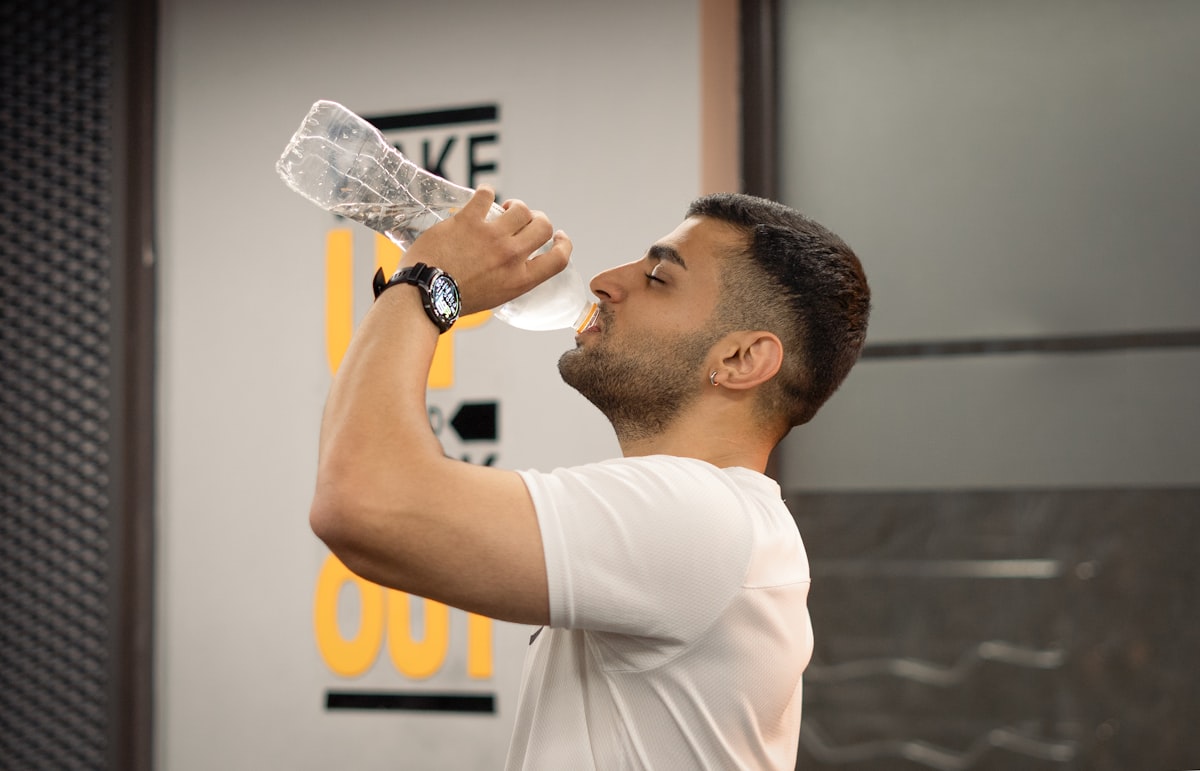
You survived. Now, bring your heart rate down gradually. Do not just sit down immediately; walk around your room for a minute, catch your breath, and grab some water. Hydration is critical for recovery.
Static Stretch Sequence
1. Child’s Pose – 1 minute. Kneel on the floor, sit back on your heels, and reach your arms forward. Releases tension in the lower back and shoulders.
2. Standing Quad Stretch – 30 seconds per leg. Hold your foot behind you and gently push your hips forward.
3. Hamstring Stretch – 30 seconds per leg. Sit on the floor, extend one leg, and reach for your toes.
4. Chest Opener – 30 seconds. Clasp your hands behind your back and gently lift them to stretch the chest and anterior delts.
Progression Strategy
Even with bodyweight workouts, you need progressive overload to keep seeing results. You cannot do the exact same workout forever and expect to change.
Weeks 1-2: Focus on surviving the 40 seconds. Pacing is key. If you need to rest during the work interval, take a breath and get back to it.
Weeks 3-4: Increase the intensity. Try to get more reps in each 40-second window. If you did 15 squats last time, aim for 16 or 17.
Weeks 5-6: Decrease the rest. Change the intervals to 45 seconds of work and 15 seconds of rest. This small change makes a massive difference in difficulty.
Tracking Your Progress: Use Body Journey to log your workout duration and how you felt. Did you get through all 4 rounds? Did you have to modify the burpees? Recording these details helps you see your fitness level improve over time. Download Body Journey to keep yourself accountable.
Recovery and Frequency
HIIT is taxing on the central nervous system. Experts recommend allowing adequate recovery between high-intensity sessions to prevent overtraining.
Aim to perform this workout 2-3 times per week, with at least one day of rest or active recovery in between. On your off days, consider a lighter upper body session or a long walk.
Body Journey Tip: Monitor your energy levels in the app. If you are consistently feeling sluggish or your performance is dropping, you might need an extra rest day. Listen to your body; it knows best.
Common Questions
Is 30 minutes really enough?
Yes. If you are working at the correct intensity, 30 minutes is more than enough. In fact, if you can go for an hour, you probably aren’t pushing hard enough during the intervals.
Can I do this every day?
We do not recommend it. HIIT is high stress (the good kind), and your body needs time to repair. Doing this daily can lead to burnout or injury. Alternate with strength training or low-intensity steady-state cardio.
What if I can’t do a push-up?
No problem. Perform them on your knees or elevate your hands on a sturdy chair or sofa. The goal is to keep moving and challenge your muscles, whatever that looks like for you today.
The Bottom Line
You don’t need a gym membership to get in the best shape of your life. You need consistency and effort. This 30-minute HIIT workout eliminates the excuses. It is fast, effective, and can be done anywhere. The only thing standing between you and your goals is the decision to start.
Start Your Transformation Today
The hardest part of any workout is putting on your shoes. Make the commitment to yourself today. Download Body Journey to track your sessions, monitor your consistency, and celebrate your wins. Your body is capable of incredible things—it is time to show yourself what you can do. Let’s get moving.