Build Power: Complete Bodyweight Strength Workout for Home
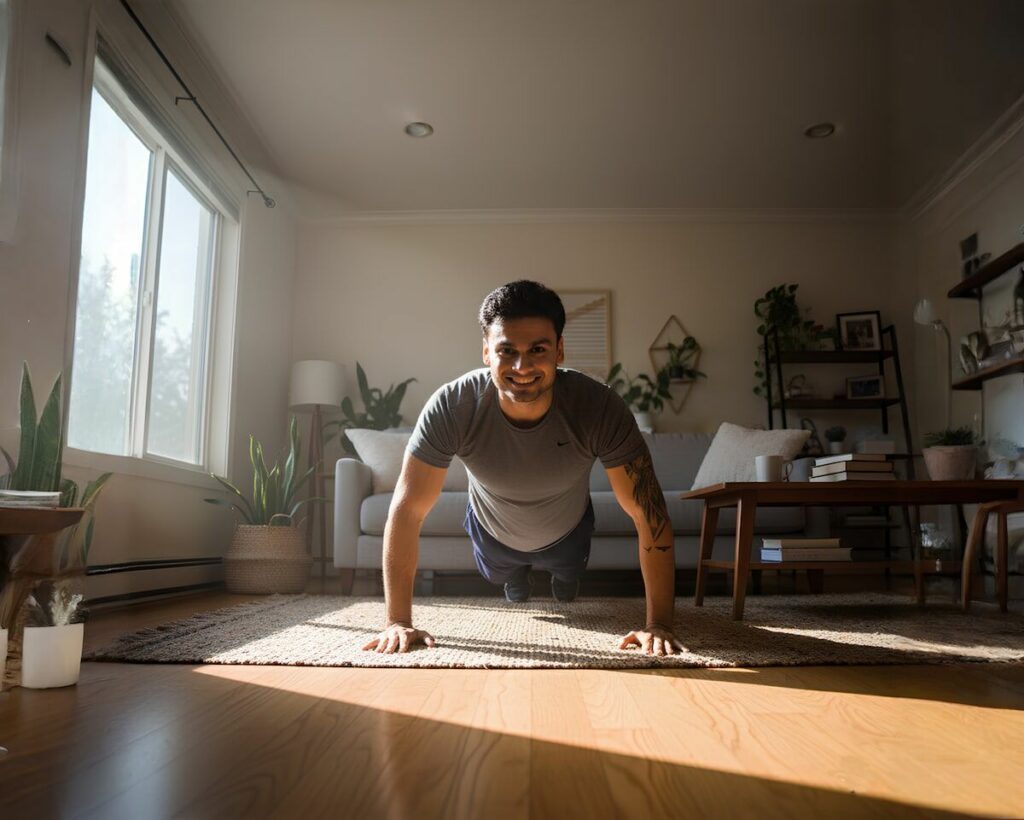
You do not need a gym membership or expensive equipment to build real power. Your own body is the ultimate training tool, capable of providing all the resistance you need. This complete bodyweight strength workout will challenge your muscles, improve your control, and help you build a stronger, more resilient physique from the comfort of your home. The journey to a powerful body starts with mastering your own weight.
According to research published in the Journal of Exercise Science and Fitness, bodyweight exercises like push-ups can induce muscle growth and strength gains comparable to traditional weightlifting when performed with the right intensity. The secret lies in progressive overload and perfect technique. You have everything you need right now to transform your physical capabilities.
Who This Workout Is For
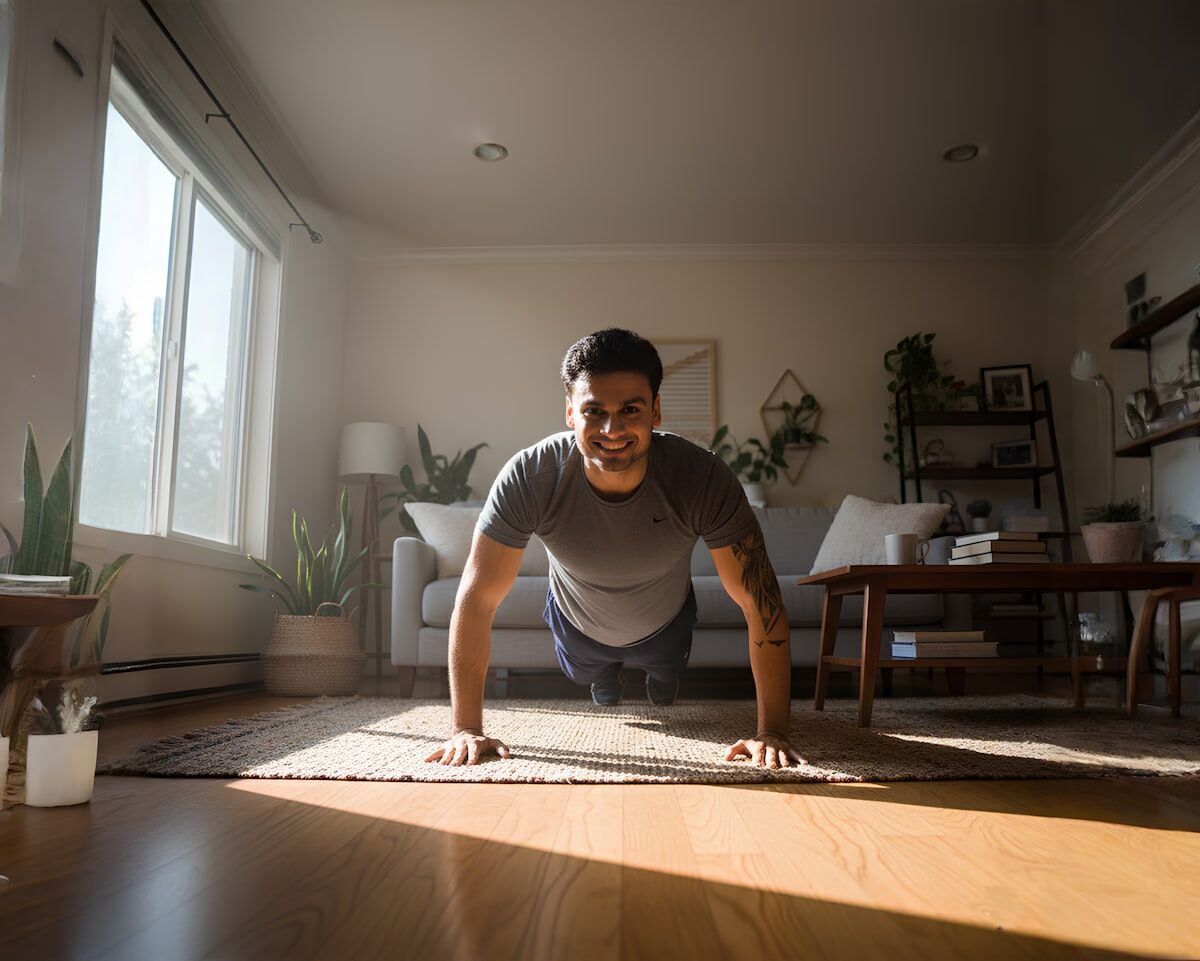
This routine is designed for anyone ready to master their body mechanics. Whether you are stepping away from the barbell, traveling without access to a gym, or just starting your fitness path, this bodyweight strength workout adapts to your current abilities. The exercises are fundamental human movements that build a foundation for long-term health and athletic performance.
It is perfect for busy professionals who need an effective home routine. By eliminating travel time to a gym, you remove friction and make consistency much easier to achieve. You can perform this routine in your living room, in a hotel room, or at a local park.
- Fitness Level: Beginner to Intermediate
- Equipment Needed: Floor space, a sturdy chair or doorway, and optional pull-up bar
- Time Required: 40 to 45 minutes
- Training Focus: Full body strength, muscular endurance, and functional mobility
Program Overview
True strength comes from moving your body through space with absolute control. This program focuses on compound movements that recruit multiple muscle groups simultaneously. By doing this, you maximize calorie burn, stimulate a greater strength response, and build a balanced physique.
The beauty of a bodyweight strength workout is its infinite versatility. You can adjust the leverage and angles to make any exercise harder or easier. This means you never outgrow the routine. You simply modify the movement to match your growing power and continue challenging your muscles.
We designed this routine to be a full body split. Training the entire body in one session ensures high frequency stimulation for all muscle groups, which is optimal for natural lifters and those relying on bodyweight resistance.
Training Split: Full body routine targeting all major movement patterns
Frequency: Three days per week with at least one rest day in between
Rest Between Sets: 60 to 90 seconds to allow adequate recovery without losing intensity
Warm-Up (5 to 10 Minutes)
A proper warm-up is non-negotiable for a successful bodyweight strength workout. Preparing your joints and elevating your heart rate prevents injury and primes your central nervous system for the work ahead. Spend at least five to ten minutes getting warm before you start the main routine. This investment pays off with better performance and less post-workout soreness.
Dynamic Warm-Up Sequence
- Jumping Jacks (60 seconds)
- Get your blood flowing and loosen up your shoulders, hips, and ankles. Focus on light, bouncy footwork.
- Arm Circles (30 seconds forward, 30 seconds backward)
- Open up the shoulder joints for the pressing movements. Make the circles gradually larger as you go.
- Bodyweight Lunges (10 reps per leg)
- Activate your quads and glutes while testing your balance and core stability.
- High Knees (45 seconds)
- Bring your knees up to waist height to prepare your hips and elevate your core temperature further.
Download Body Journey to log your warm-up routines and ensure you never skip this crucial step in your fitness journey.
The Workout
This bodyweight strength workout targets every major muscle group with precision. Focus on your breathing and maintain strict form on every single repetition. Quality always beats quantity, especially when you are building strength without external loads.
Exercise 1: Classic Push-Ups
Sets: 4 | Reps: 8 to 15 | Rest: 90 seconds
The push-up is the ultimate test of upper body strength and core stability. It develops your chest, shoulders, and triceps while demanding total body tension from your neck down to your ankles. Starting with push-ups ensures your primary pressing muscles are fresh for maximum effort.
How to Perform:
- Place your hands firmly on the ground just outside shoulder width.
- Extend your legs back and brace your core so your body forms a straight, rigid line.
- Lower yourself slowly until your chest is roughly an inch from the floor.
- Press forcefully back up to the starting position, fully locking out your arms.
Form Cues:
- Keep your elbows tucked at a 45-degree angle to protect your shoulder joints.
- Squeeze your glutes to prevent your lower back from sagging toward the floor.
- Keep your neck neutral by looking slightly ahead on the floor, rather than straight down.
Modifications:
- Beginner: Perform the movement with your hands elevated on a sturdy chair, bench, or kitchen counter.
- Advanced: Elevate your feet on a chair for decline push-ups to heavily target the upper chest and front deltoids.
Common Mistakes:
- Flaring elbows: This puts excessive and dangerous stress on the shoulder joint. Tuck them in closer to your ribs immediately.
- Sagging hips: Engage your core aggressively to maintain a rigid plank position throughout the entire movement.
How Body Journey Helps: Track your push-up repetitions in Body Journey. Watching your rep count increase week over week is the ultimate proof of your progress and consistency.
Exercise 2: Bodyweight Squats
Sets: 4 | Reps: 15 to 20 | Rest: 90 seconds
Squats are the undisputed foundation of lower body power. They target your quadriceps, hamstrings, and glutes effectively. Mastering the strict bodyweight squat is absolutely essential before adding any external load or moving to complex variations.
How to Perform:
- Stand tall with your feet slightly wider than shoulder width and your toes pointed slightly outward.
- Initiate the movement by pushing your hips back as if sitting deeply into a chair.
- Lower yourself until your thighs are parallel to the floor, or lower if your mobility allows.
- Drive powerfully through your whole foot to return to a standing position, squeezing your glutes at the top.
Form Cues:
- Keep your chest up proud and your eyes facing forward.
- Ensure your knees track directly over your toes to avoid valgus collapse.
- Keep your heels firmly planted on the ground at all times to maintain proper balance and power distribution.
Modifications:
- Beginner: Squat down to a sturdy chair and pause briefly before standing back up.
- Advanced: Try pistol squats or elevated Bulgarian split squats for an intense unilateral challenge.
Common Mistakes:
- Knees caving in: Actively push your knees outward to engage your glute medius and protect your joints.
- Lifting the heels: Focus on ankle mobility and sit back further into the squat to keep the weight centered.
How Body Journey Helps: Use Body Journey to note how deep you can squat comfortably. Over time, you will see your range of motion and leg strength improve drastically as you document your journey.
Exercise 3: Doorway Rows (or Pull-Ups)
Sets: 4 | Reps: 8 to 12 | Rest: 90 seconds
A balanced bodyweight strength workout must include pulling movements to prevent postural imbalances. If you do not have a pull-up bar, doorway rows or sturdy table rows are excellent alternatives. These exercises build your lats, rhomboids, and biceps, contributing to a strong, wide back.
How to Perform:
- Grip the frame of a sturdy doorway securely with both hands at roughly chest height.
- Place your feet close to the base of the frame and lean back until your arms are fully straight.
- Pull your chest toward the doorway by driving your elbows back and squeezing your back muscles.
- Slowly lower yourself back to the starting position under complete control.
Form Cues:
- Pinch your shoulder blades together hard at the top of the movement.
- Keep your shoulders pulled down and away from your ears to engage the lats properly.
- Maintain a straight line from your head to your heels, keeping your core tight.
Modifications:
- Beginner: Stand further away from the doorway to reduce the angle and the resistance level.
- Advanced: Use a pull-up bar for strict overhand pull-ups or chin-ups.
Common Mistakes:
- Using momentum: Pull smoothly and control the descent to maximize muscle tension and growth.
- Shrugging the shoulders: Keep your lats engaged to avoid overworking the upper traps and neck.
How Body Journey Helps: Log the specific variation you choose in Body Journey. You can easily switch from doorway rows to pull-ups in the app once you build enough pulling strength and back power.
Exercise 4: Pike Push-Ups
Sets: 3 | Reps: 6 to 10 | Rest: 90 seconds
This movement shifts the muscular focus from your chest directly to your shoulders and triceps. It is a fantastic stepping stone toward impressive skills like handstand push-ups and builds incredible vertical pressing power without needing heavy dumbbells.
How to Perform:
- Start in a standard push-up position on the floor.
- Walk your feet toward your hands while lifting your hips high to form an inverted V shape with your body.
- Lower the crown of your head toward the floor between your hands slowly.
- Press strongly through the floor to push yourself back up to the starting V position.
Form Cues:
- Look back at your toes constantly to keep your neck in a safe, neutral position.
- Keep your legs as straight as your hamstring flexibility allows.
- Control the descent strictly to avoid bumping your head on the ground.
Modifications:
- Beginner: Hold the elevated pike position statically for 30 seconds without the pressing movement to build shoulder endurance.
- Advanced: Elevate your feet on a chair to drastically increase the weight on your shoulders.
Common Mistakes:
- Flaring elbows outward: Keep your elbows pointing back toward your legs to protect the delicate shoulder joint.
- Bending the knees excessively: This reduces the angle. Work on your hamstring flexibility to maintain the rigid V shape.
Exercise 5: Glute Bridges
Sets: 3 | Reps: 15 to 20 | Rest: 60 seconds
To counteract the sitting we do all day, we need to build strong, resilient glutes. The glute bridge is a highly effective movement for activating the entire posterior chain. Strong glutes protect your lower back and improve your athletic performance in every other activity.
How to Perform:
- Lie on your back with your knees bent and feet flat on the floor near your glutes.
- Press through your heels and squeeze your glutes forcefully to lift your hips.
- Create a straight, solid line from your knees to your shoulders.
- Hold for a brief, tight second at the top before lowering your hips smoothly.
Form Cues:
- Avoid overextending your lower back. The lift should come entirely from glute contraction.
- Keep your core braced tightly throughout the whole range of motion.
- Drive your knees outward slightly at the top of the movement for better activation.
Modifications:
- Beginner: Hold the top position statically for a longer duration to build mind to muscle connection.
- Advanced: Perform single-leg glute bridges for an intense unilateral burn that challenges your stability.
Common Mistakes:
- Pushing through the toes: This shifts the work to the quads unnecessarily. Always drive powerfully through the heels.
- Rushing the reps: Squeeze deliberately at the top to ensure full muscle activation and optimal results.
How Body Journey Helps: Use Body Journey to log your glute bridge variations. The app helps you visualize how stronger glutes correlate to better overall leg strength and improved posture.
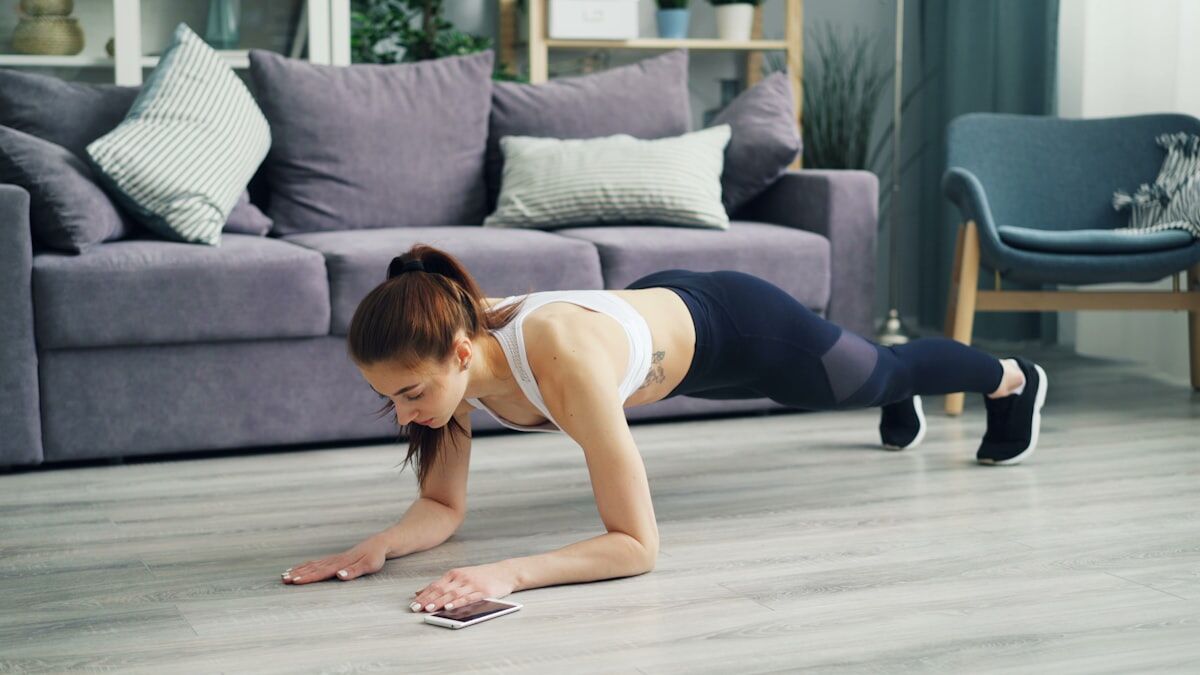
Exercise 6: The Forearm Plank
Sets: 3 | Reps: 45 to 60 seconds | Rest: 60 seconds
A strong core is the foundational anchor for every other movement in this bodyweight strength workout. The plank builds deep endurance in your abdominals and obliques, protecting your spine and improving your overall structural integrity.
How to Perform:
- Get down on the floor and rest your entire body weight on your forearms and toes.
- Ensure your elbows are positioned directly beneath your shoulders for proper support.
- Engage your abs, glutes, and quads simultaneously to create full body tension.
- Hold this rigid position completely still while breathing steadily.
Form Cues:
- Imagine physically pulling your elbows toward your toes to create maximum core tension.
- Keep your back perfectly flat like a table.
- Do not hold your breath. Take slow, controlled breaths into your belly.
Modifications:
- Beginner: Drop your knees to the floor while carefully maintaining the straight line from your knees to your shoulders.
- Advanced: Try a challenging hollow body hold on your back or reach one arm forward alternating sides during the plank.
Common Mistakes:
- Letting the hips drop: This strains the lower back severely. Squeeze your glutes hard to keep the hips elevated.
- Looking up: Keep your gaze down at your hands to maintain a neutral, safe neck posture.
According to research published in the Journal of Strength and Conditioning Research, consistent core stability training significantly improves functional movement and greatly reduces the risk of injury during daily activities.
Cool-Down and Stretching (5 to 10 Minutes)
Cooling down is vital for your long term recovery. Taking a few minutes to stretch helps lower your heart rate safely, relaxes tense muscles, and improves your flexibility over time. Do not skip this part of the bodyweight strength workout.

Static Stretch Sequence
- Childs Pose (60 seconds)
- Sit back on your heels with your arms stretched forward on the floor. This opens up your lats and relieves tension in your lower back.
- Chest Opener Stretch (30 seconds per side)
- Place one forearm against a doorway and gently turn your body away to stretch the tight chest fibers.
- Seated Hamstring Stretch (45 seconds)
- Sit on the floor, reach for your toes, and breathe deeply into the stretch to release your hamstrings.
- Hip Flexor Lunge Stretch (30 seconds per side)
- Kneel on one knee and gently press your hips forward to release tightness in the hip flexors caused by sitting.
Progression Strategy
To see continuous, undeniable results, you must implement progressive overload. With a bodyweight strength workout, you progress by manipulating leverage, increasing repetitions, or slowing down the tempo of the exercise.
Week 1 to 2: Focus purely on mastering the flawless form of each exercise. Stay within the lower end of the rep ranges and prioritize a deep, full range of motion.
Week 3 to 4: Aim to add one or two repetitions to every single set. Push yourself closer to muscular failure while keeping form strict.
Week 5 to 6: Introduce challenging pauses. For example, hold the bottom of your squat or push-up for two solid seconds before pressing back up.
Week 7 to 8: Move to advanced exercise variations like elevated feet for push-ups or difficult single-leg exercises for your lower body.
Tracking Your Progress: Download Body Journey to carefully record your reps, sets, and workout duration. Seeing your progression documented clearly over eight weeks is an incredible motivator.
Recovery and Frequency
Your muscles do not grow while you are training. They repair and grow while you are resting and sleeping. Recovery is just as critical as the workout itself. Ignoring recovery will quickly lead to burnout and plateaus.
Perform this bodyweight strength workout three times a week for optimal results. Monday, Wednesday, and Friday is a perfect, balanced schedule. On your off days, stay active with light walking or mobility work, but completely avoid intense resistance training.
Body Journey Tip: Use the app to log your sleep quality and daily energy levels. This helps you identify quickly if you are recovering adequately between your strenuous workout sessions.
Common Questions
Can I really build muscle without weights?
Yes, absolutely. Your muscles only recognize mechanical tension, not the source of that tension. By taking bodyweight exercises close to failure, you will stimulate significant and noticeable muscle growth.
What if I cannot do a standard push-up yet?
Start with your hands elevated on a stable surface like a kitchen counter or sturdy table. As you get stronger over the weeks, gradually move to lower surfaces until you can confidently reach the floor.
How long will it take to see results?
Consistency is the only true key to success. If you follow this routine faithfully three times a week and track your progress in Body Journey, you will feel significantly stronger within two weeks and see visible physical changes within four to six weeks.
The Bottom Line
A comprehensive bodyweight strength workout proves that high level fitness is completely accessible to everyone. By mastering these fundamental human movements, you build functional power that translates beautifully to every area of your life. Stay consistent, focus heavily on perfect technique, and the results will undoubtedly follow.
Start Your Transformation Today
This workout delivers incredible results, but only if you diligently track your progress. Download Body Journey to log every set, track your progressive overload, and stay completely accountable to your goals. Start building your best body today and watch your strength skyrocket from the comfort of your own home.