Glute and Hamstring Builder: Complete Lower Body Workout
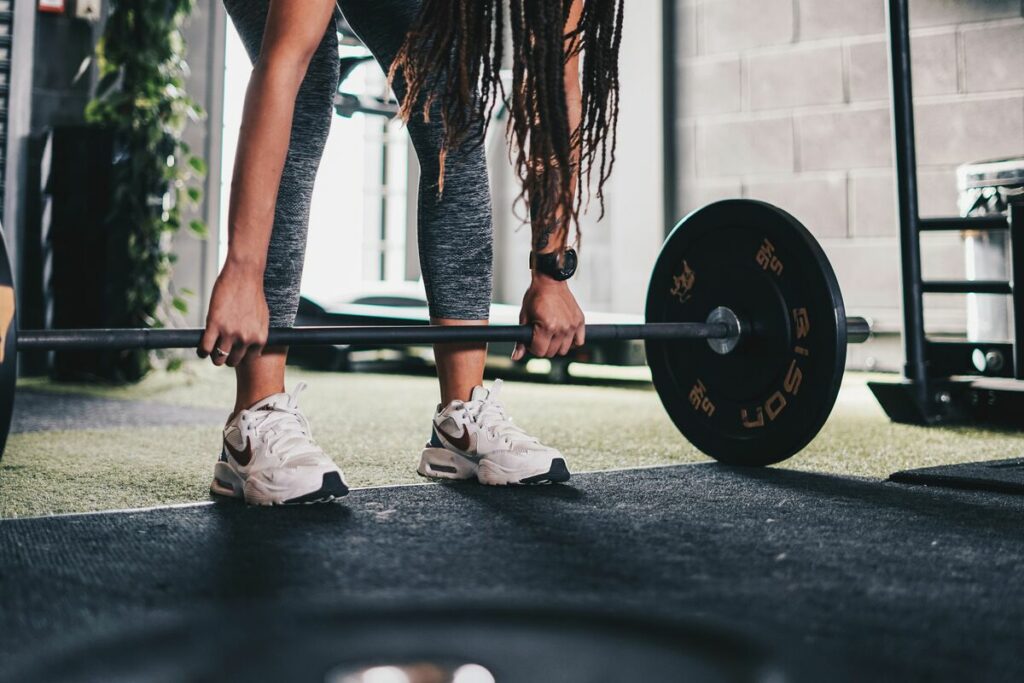
Many lifters spend hours in the gym focusing on quad-dominant movements like standard leg presses and machine extensions while neglecting the muscle groups that drive true athletic performance and lower body power. A dedicated glute and hamstring workout is essential for building a balanced, resilient physique, improving hip extension strength, and protecting your lower back and knees from injury. Whether your goal is maximum muscular hypertrophy or functional athletic power, prioritizing your posterior chain will completely transform your lower body development.
According to research on hamstring activation and hip extension, exercises that combine heavy hip extension with knee flexion yield superior muscle activation compared to quad-focused training splits. Furthermore, maintaining strong glutes and hamstrings provides the structural foundation required for heavier compound lifting across all your training days.
Who This Workout Is For
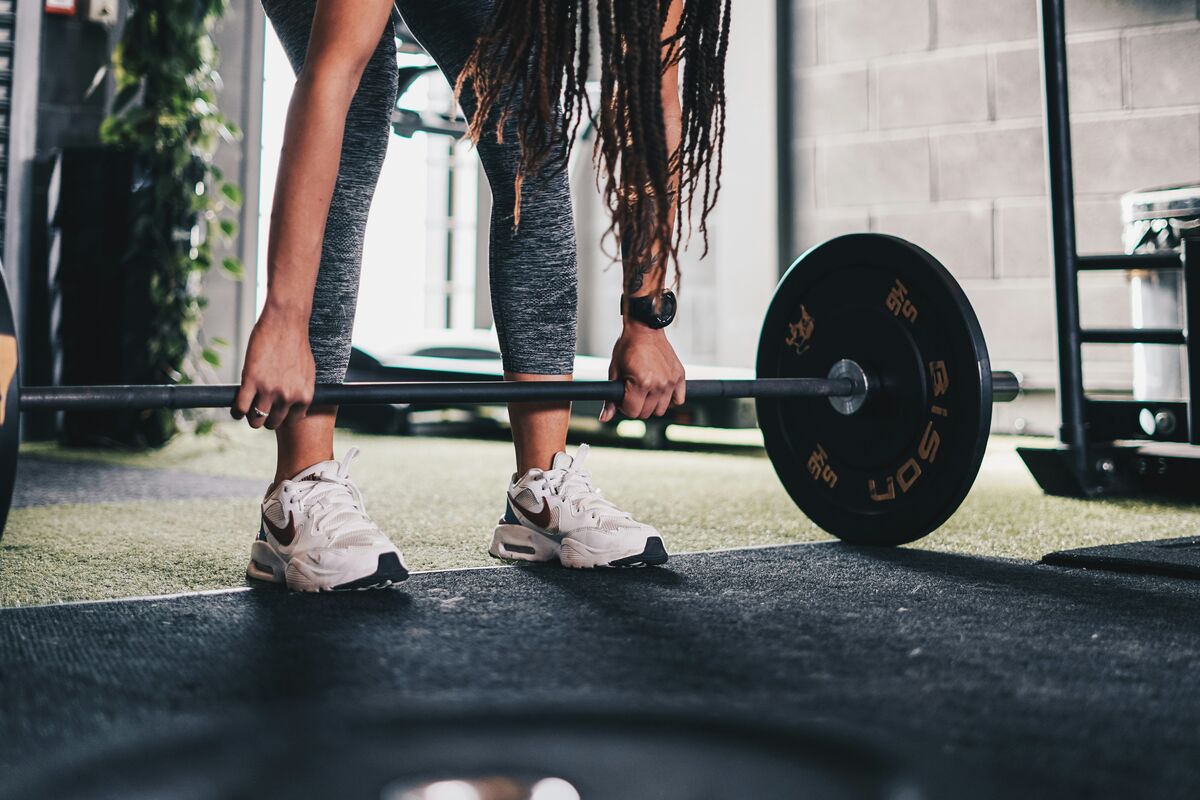
This routine is designed for intermediate and advanced lifting enthusiasts who want to build dense muscle, maximize hip extension strength, and break through lower body plateaus. If you have been following a standard training split and noticed that your glute and hamstring development is lagging behind your quads, this focused program delivers the exact volume and mechanical tension required for growth.
Before jumping into this heavy session, ensure you have reviewed our comprehensive guide to lower body hypertrophy workout fundamentals. Understanding proper exercise sequencing and muscle recovery will help you get the maximum benefit from every rep in this guide.
- Fitness Level: Intermediate to Advanced
- Equipment Needed: Barbell, weight plates, flat bench, dumbbells, cable machine, lying leg curl machine
- Time Required: 50 to 60 minutes
- Training Focus: Posterior chain hypertrophy, glute activation, and hamstring strength
Program Overview
The philosophy behind this glute and hamstring workout centers on progressive overload, varied movement planes, and complete muscular tension. We combine heavy horizontal hip extension (hip thrusts), heavy hinge patterns (Romanian deadlifts), unilateral stability work (Bulgarian split squats), and isolated knee flexion (leg curls). This multi-angle attack ensures every subdivision of the gluteus maximus, gluteus medius, and hamstring complex is fully stimulated.
Mastering this program requires consistent tracking of your lifting metrics. You can download Body Journey to seamlessly log your weights, rest intervals, and target sets. To explore how effective routine design fits into your broader fitness plan, check out our principles for workout training and programming.
Training Split: Perform this session once per week as part of an upper/lower split, or pair it with a separate quad-focused day later in the week.
Frequency: 1 to 2 times per 7-day training cycle.
Rest Between Sets: 2 to 3 minutes for heavy compound lifts: 60 to 90 seconds for isolation and accessory movements.
Warm-Up (5 to 10 Minutes)
A thorough dynamic warm-up is non-negotiable before heavy posterior chain lifting. Warming up increases core body temperature, lubricates hip joints, and enhances neuromuscular firing in the glutes before you touch a weighted barbell.
Dynamic Warm-Up Sequence
- Bodyweight Hip Hinge – 2 sets of 15 reps. Focus on pushing your hips backward and feeling a light stretch in your hamstrings while keeping your spine neutral.
- Glute Bridges – 2 sets of 15 reps. Lie on your back, bend your knees, and drive through your heels to contract your glutes at the top for 2 seconds.
- Bodyweight Reverse Lunges – 2 sets of 10 reps per leg. Step backward smoothly to open up your hip flexors and prime your stabilizers.
- Lateral Band Walks – 2 sets of 15 steps per direction. Place a resistance band around your knees to activate the gluteus medius and prep hip stability.
The Workout
Exercise 1: Barbell Hip Thrust
Sets: 4 | Reps: 8-10 | Rest: 2-3 minutes
The barbell hip thrust is the absolute gold standard for isolated glute hypertrophy. Unlike squats where peak tension occurs at the bottom in deep flexion, hip thrusts place maximum mechanical tension on the glutes at full hip extension. This exercise allows you to overload the gluteus maximus with heavy weights in an incredibly stable position.
Placing this movement first guarantees that your central nervous system and gluteal muscles are completely fresh, allowing you to lift heavy loads safely and effectively.
How to Perform:
- Sit on the floor with your upper back supported against a sturdy bench and a padded barbell rolled directly over your hips.
- Plant your feet flat on the ground, shoulder-width apart, with your shins vertical when your hips are fully elevated.
- Brace your core, press your upper back into the bench, and drive through your heels to extend your hips until your torso and thighs form a straight line parallel to the floor.
- Squeeze your glutes forcefully at the top position for one full second without arching your lower back.
- Lower the barbell with control until your hips hover just above the floor, then reset and repeat.
Form Cues:
- Keep your chin tucked toward your chest throughout the entire movement to maintain a neutral spine.
- Drive directly through your heels rather than your toes to maximize glute activation.
- Ensure your knees track outward over your toes and do not collapse inward during hip extension.
Modifications:
- Beginner: Perform bodyweight glute bridges on the floor or use a single heavy dumbbell across your hips.
- Advanced: Pause each rep for 3 seconds at lockout, or use resistance bands around your knees while loading the barbell.
Common Mistakes:
- Hyperextending the lower back: Stop the movement when your hips are aligned with your ribs: do not push beyond neutral spine using lumbar extension.
- Placing feet too far forward: If your feet are set too far out, your hamstrings will dominate the movement instead of your glutes.
How Body Journey Helps: Track your working weights and set counts directly in Body Journey. Monitoring your progressive overload week after week ensures you are continuously pushing your muscles to grow.
Exercise 2: Barbell Romanian Deadlift (RDL)
Sets: 4 | Reps: 8-10 | Rest: 2 minutes
While the hip thrust targets the glutes in a shortened position, the Romanian deadlift loads both the hamstrings and glutes under deep mechanical stretch. According to biomechanical studies on posterior chain training, training muscles at long muscle lengths is one of the primary drivers of muscular hypertrophy.
Executing smooth Romanian deadlifts complements your overall lifting performance across other routines, such as our recommended pull day workout routine where hamstring and back stability are paramount.
How to Perform:
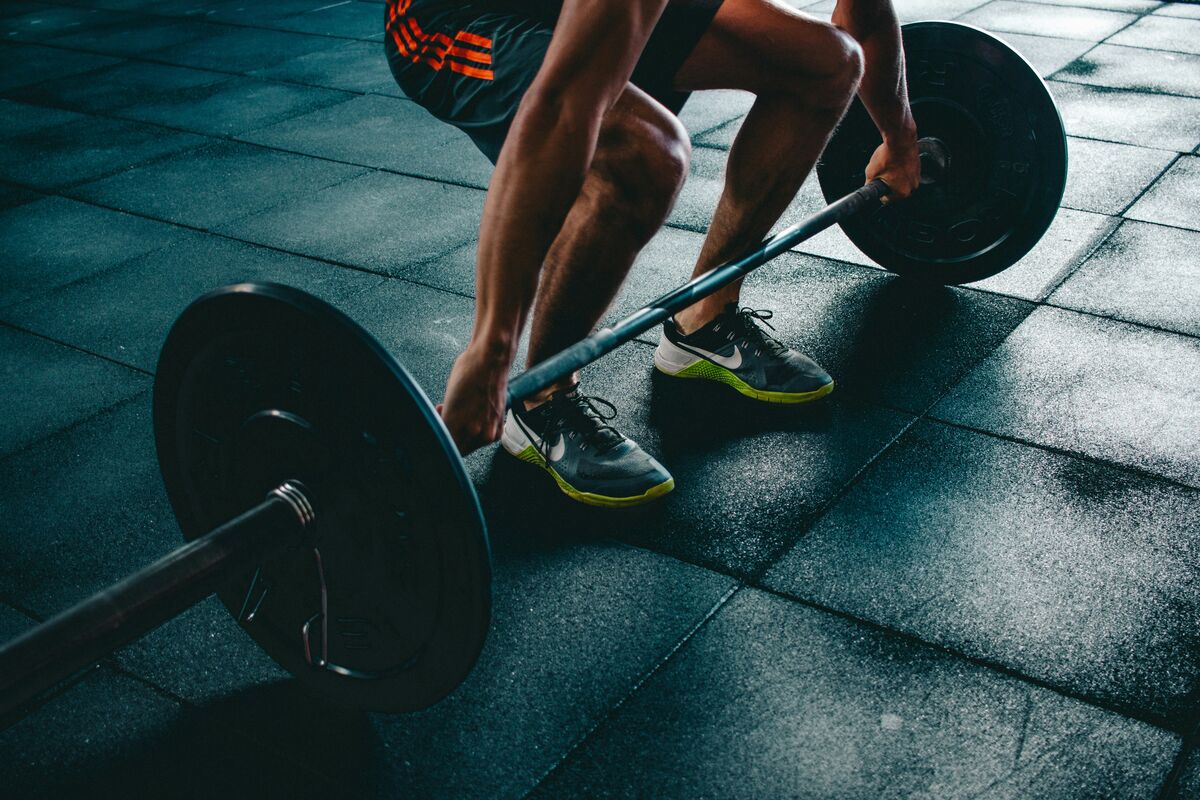
- Stand tall holding a barbell with an overhand grip, hands placed slightly wider than shoulder-width apart, and feet hip-width apart.
- Unlock your knees slightly, roll your shoulders back, and pull your shoulder blades down into your back pockets.
- Initiate the movement by hinging at your hips and pushing your buttocks backward toward the wall behind you while maintaining a rigid spine.
- Lower the barbell close to your shins until you feel a strong stretch in your hamstrings, typically around mid-shin level.
- Drive your hips forward aggressively and squeeze your glutes at the top to return to the starting standing position.
Form Cues:
- Keep the bar in constant contact with your legs throughout the descent to protect your lumbar spine.
- Think about pushing your hips back rather than bending forward at the waist.
- Maintain a neutral neck alignment by looking at the floor a few feet in front of you as you hinge.
Modifications:
- Beginner: Use a pair of moderate dumbbells or perform trap bar deadlifts to simplify the movement mechanics.
- Advanced: Perform slow 4-second eccentric descents or use deficit elevated foot placement to increase range of motion.
Common Mistakes:
- Rounding the lower back: Excessive spine flexing under load is dangerous. Reduce the weight and focus on hip mobility.
- Bending the knees too much: Turning an RDL into a conventional squat shifts tension away from the hamstrings onto the quads.
How Body Journey Helps: Use Body Journey to log your rest periods accurately between heavy RDL sets. Resting 2 full minutes allows your central nervous system to recover for peak performance.
Exercise 3: Dumbbell Bulgarian Split Squat
Sets: 3 | Reps: 10-12 per leg | Rest: 90 seconds
Unilateral training is vital for eliminating muscular imbalances, improving hip stability, and maximizing glute growth. The Bulgarian split squat isolated work places tremendous tension on the working leg gluteus maximus while demanding continuous balance from your core stabilizers.
By leaning your torso slightly forward during the descent, you shift the load directly onto the working glute and upper hamstring complex.
How to Perform:
- Stand two feet in front of a flat workout bench holding a dumbbell in each hand.
- Extend your left leg back and place the top of your foot flat on the bench.
- Lower your body vertically by bending your right knee until your front thigh is roughly parallel to the ground, keeping a slight forward torso lean.
- Push firmly through the heel of your front foot to return to the upright position.
- Complete all reps on the right leg before switching to the left leg.
Form Cues:
- Maintain a solid foot contact with your big toe, little toe, and heel firmly gripping the ground.
- Keep your front knee aligned over your mid-foot: do not let it cave inward toward your midline.
- Maintain an active core to keep your hips square throughout the entire set.
Modifications:
- Beginner: Perform bodyweight reverse lunges flat on the floor to build stability before elevating your back foot.
- Advanced: Hold one heavy dumbbell in the hand opposite your working leg (contralateral loading) to challenge your core stabilizers even further.
Common Mistakes:
- Standing too close to the bench: Placing your front foot too close forces your front knee too far forward and shifts load to your quadriceps.
- Staying upright: Sitting completely vertical reduces glute involvement. A slight forward torso hinge is essential for posterior loading.
How Body Journey Helps: When you try Body Journey free, you can log individual leg metrics to track and balance bilateral strength development over time.
Exercise 4: Lying Leg Curl Machine
Sets: 3 | Reps: 12-15 | Rest: 60-90 seconds
The hamstrings serve two anatomical functions: hip extension and knee flexion. While deadlifts address hip extension, machine leg curls are necessary to isolate knee flexion. A comprehensive study published in the Journal of Strength and Conditioning Research demonstrated that isolated knee flexion exercises stimulate the semitendinosus and biceps femoris muscles differently than multi-joint hip hinges.
Integrating machine curls midway through your workout ensures thorough muscular fatigue without taxing your lower back.
How to Perform:
- Lie face down on the leg curl machine with the padded lever resting just below your calf muscles and above your ankles.
- Grip the machine handles firmly and press your hips flat against the bench pad to prevent lower back arching.
- Curl your legs upward toward your glutes in a smooth, explosive movement, squeezing your hamstrings hard at peak contraction.
- Pause briefly at the top, then lower the weight pad slowly over a 3-second control phase back to full extension.
Form Cues:
- Keep your hips pressed firmly into the bench throughout the entire contraction.
- Point your toes slightly outward or keep ankles neutral to maximize hamstring engagement.
- Avoid using momentum or jerking your lower back to lift heavy weight plates.
Modifications:
- Beginner: Use a lighter weight and focus on a slow, deliberate 4-second lowering phase.
- Advanced: Perform single-leg machine curls or add 3-second isometric holds at peak contraction on every rep.
Common Mistakes:
- Lifting hips off the pad: Allowing your hips to rise reduces hamstring isolation and puts unwanted stress on your lower lumbar spine.
- Rushing the lowering phase: The lowering portion builds significant muscle mass. Do not let the weights slam down.
How Body Journey Helps: Track your rep velocity and weight progressions effortlessly within Body Journey. Consistent logging encourages controlled, progressive overload.
Exercise 5: Standing Cable Glute Kickback
Sets: 3 | Reps: 12-15 per leg | Rest: 60 seconds
Cable kickbacks provide continuous, constant tension across the full range of motion. This isolation exercise specifically targets the upper glute region (gluteus medius and upper gluteus maximus), helping shape and round the upper posterior chain while improving hip rotation stability.
Complementing heavy compound lifts with targeted isolation is a key strategy shared across all balanced programming, such as our full body strength workout guide.
How to Perform:
- Attach an ankle strap to a low cable pulley machine and secure it around your working ankle.
- Face the cable machine stack, hold the support frame for balance, and hinge slightly forward at your hips.
- Keeping your core braced and working leg straight, extend your leg backward in a controlled arc until your glute is fully contracted.
- Squeeze your glute for one second at the peak of the movement before returning your leg slowly to the start position.
- Complete your target reps on one side before switching the ankle strap to your opposite leg.
Form Cues:
- Focus entirely on initiating the movement with your glute muscle rather than kicking your leg using momentum.
- Keep your torso stable and avoid swinging your upper body back and forth.
- Flex your foot slightly at the top to enhance muscular activation.
Modifications:
- Beginner: Perform standing bodyweight kickbacks or use a light resistance mini-band around your ankles.
- Advanced: Turn your working toe slightly outward at a 45-degree angle to place extra emphasis on the upper glute complex.
Common Mistakes:
- Arching the lower back: Kicking your leg too high by arching your back shifts work off your glutes onto your lumbar spine.
- Using excessive weight: Heavy weight leads to swinging body momentum. Keep the load moderate and focus on peak muscular contraction.
How Body Journey Helps: Body Journey makes tracking unilateral volume simple. Ensure both legs receive equal work to build symmetrical strength.
Exercise 6: Standing Dumbbell Calf Raise
Sets: 4 | Reps: 15-20 | Rest: 60 seconds
No lower body training routine is complete without addressing the lower leg complex. The gastrocnemius muscle crosses the knee joint and assists the hamstrings during knee flexion. Strong calves stabilize your ankles during heavy deadlifts, hip thrusts, and squats, providing a firm base for all athletic movements.
How to Perform:
- Stand tall on the edge of a weight plate or calf block with your heels hanging off the edge, holding a heavy dumbbell in one hand.
- Lower your heels downward smoothly until you feel a deep stretch throughout your calf muscles and Achilles tendon.
- Press powerfully through the balls of your feet to elevate your body as high as possible onto your toes.
- Squeeze your calves forcefully at peak contraction for two full seconds before slowly lowering your heels back down.
Form Cues:
- Maintain completely straight knees without locking them out to keep tension focused on the gastrocnemius.
- Avoid bouncing at the bottom of the movement: utilize full, controlled control on every rep.
- Push evenly across your big toe and second toe for optimal ankle alignment.
Modifications:
- Beginner: Perform bodyweight calf raises on flat ground holding onto a wall for support.
- Advanced: Perform single-leg calf raises with a 3-second lowering phase on every single rep.
Common Mistakes:
- Bouncing reps: Fast bouncing relies on elastic tendon rebound rather than muscular work. Slow down your movement pace.
- Partial range of motion: Skimping on the bottom stretch or top lockout cuts your muscle building results in half.
How Body Journey Helps: Log your calf set completions in Body Journey. You can Get started with Body Journey today to track total weekly training volume across every muscle group.
Cool-Down and Stretching (5 to 10 Minutes)
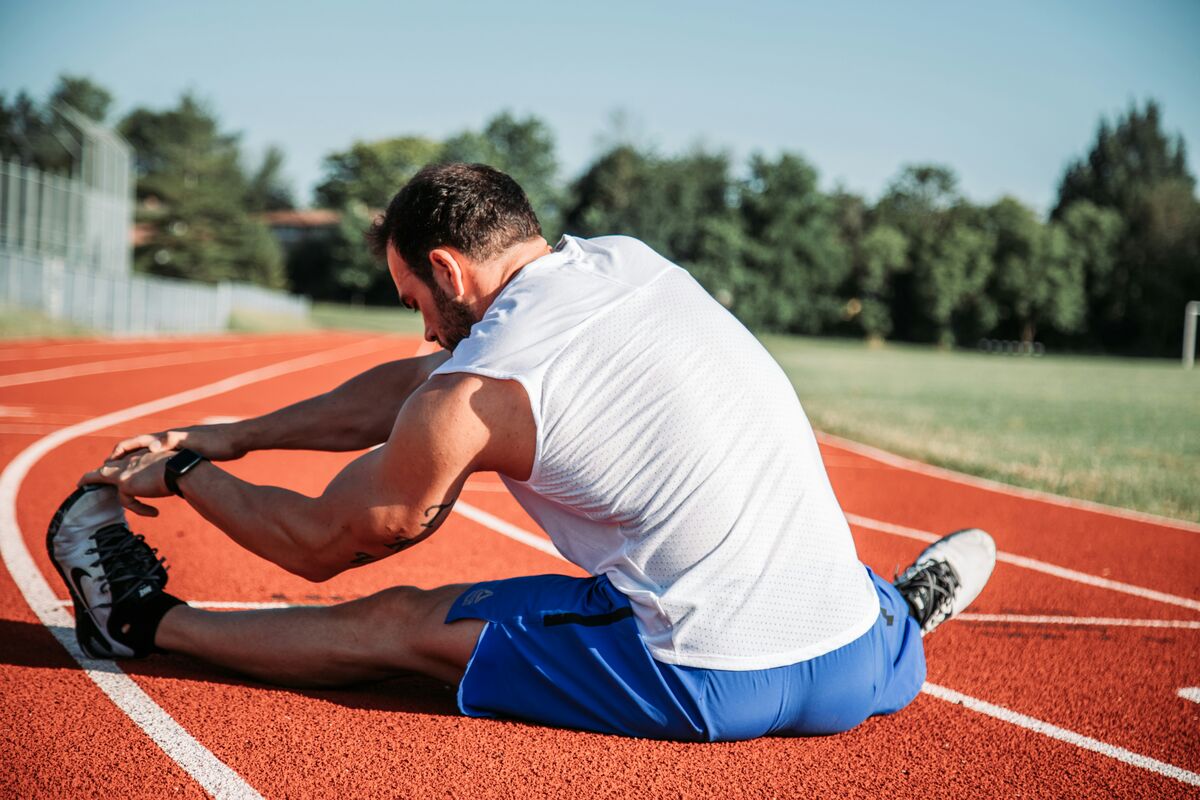
Finishing your training session with dedicated static stretching accelerates recovery, lowers elevated heart rates, and helps restore normal resting muscle length in tight hamstrings and hip flexors. Spending five minutes on the mat post-workout significantly reduces muscle stiffness over the following 48 hours.
Static Stretch Sequence
- Kneeling Hip Flexor Stretch – Hold for 45 seconds per side. Kneel on one knee, tuck your pelvis slightly, and shift your weight forward to open up the hip flexor of your rear leg.
- Seated Single-Leg Hamstring Stretch – Hold for 45 seconds per side. Sit on the floor, extend one leg straight out, tuck the opposite foot against your inner thigh, and hinge gently over your extended leg.
- Figure-Four Piriformis Stretch – Hold for 45 seconds per side. Lie on your back, cross your right ankle over your left knee, and pull your left thigh toward your chest to stretch your outer glute.
- Standing Calf Stretch – Hold for 45 seconds per side. Press your hands against a wall, step one leg back, and press your rear heel firmly into the floor while keeping your back leg straight.
Progression Strategy
Muscular growth relies entirely on systematic progressive overload. You cannot perform the exact same weights and reps indefinitely and expect your body to transform. Follow this 8-week periodization strategy to guarantee continuous gains from this program.
Weeks 1 to 2 (Foundation Phase): Focus on mastering technique and establishing your baseline working loads. Choose weights that leave 2 reps in reserve (RIR 2) at the end of each set.
Weeks 3 to 4 (Volume Accumulation): Increase your working load by 2.5 to 5 pounds on compound lifts like hip thrusts and Romanian deadlifts while keeping set and rep counts identical.
Weeks 5 to 6 (Intensity Peak): Push your working sets closer to absolute failure (RIR 1). If you hit the top of the rep range easily, add small weight increments to maintain mechanical tension.
Weeks 7 to 8 (Deload and Reset): Reduce total working sets by 50 percent and drop weights by 20 percent. This deliberate deload allows your tendons, joints, and nervous system to fully recover before initiating your next high-intensity training cycle.
Tracking Your Progress: Consistently recording your training sessions is the single most effective habit for long-term transformation. Using Body Journey allows you to review your workout history, monitor historical load graphs, and verify that progressive overload is taking place every week.
Recovery and Frequency
The glutes and hamstrings are massive, powerful muscle groups that require adequate recovery time between heavy sessions. Muscle protein synthesis remains elevated for roughly 24 to 48 hours post-workout. Providing proper nutrition, hydration, and restful sleep during this window is essential for building new muscle tissue.
Allow at least 48 to 72 hours of rest before training your lower body intensely again. If you experience significant Delayed Onset Muscle Soreness (DOMS), engage in light active recovery such as walking or swimming to promote blood flow without causing additional muscle damage.
Body Journey Tip: Use the Body Journey app daily to track your overall recovery metrics, muscle readiness, and training consistency. Monitoring how your body responds over time empowers you to make smart, data-driven adjustments to your routine.
Frequently Asked Questions
How often should I do this glute and hamstring workout?
For most intermediate lifters, performing this dedicated posterior chain routine once per week is ideal. If you follow an upper/lower training split, you can run this workout on your primary posterior day and perform a quad-dominant session 3 to 4 days later.
Can I build my glutes and hamstrings at home with dumbbells?
Yes, you can build impressive lower body muscles at home by substituting dumbbell hip thrusts, single-leg Romanian deadlifts, and walking lunges. However, as you get stronger, transitioning to heavy barbells provides the high mechanical tension needed for maximum growth.
Why do I feel my lower back during Romanian deadlifts?
Feeling your lower back usually indicates that you are rounding your spine or hinging forward past your natural hamstring mobility limits. Keep the barbell close to your legs, brace your core tightly, and only lower the weight as far as your hamstrings allow while maintaining a flat back.
Should I train quads on the same day as glutes and hamstrings?
You can train quads on the same day if you follow a full body split. However, splitting your lower body training into dedicated quad days and glute/hamstring days allows you to devote maximum energy and heavy lifting volume to each specific muscle group.
The Bottom Line
Building a powerful, symmetrical lower body requires targeted focus on the posterior chain. By combining heavy horizontal hip extension, deep hinge patterns, unilateral stability, and isolated knee flexion, this comprehensive routine delivers everything you need for maximum growth. Stay patient, execute proper form on every rep, and prioritize continuous progression.
Start Your Transformation Today
Ready to execute this workout and transform your lower body? Download Body Journey today to log every set, track your progressive overload week over week, and take full control of your fitness goals. Your ultimate transformation starts with smart, consistent tracking.