4 Muscle Soreness Myths That Are Sabotaging Your Growth

Do you measure workout success by how hard it is to walk down stairs the next morning? Many lifters fall into believing that crippling muscle soreness is proof of a great workout. Understanding recovery science helps you build strength faster without joint pain or burnout.
The Truth About Muscle Soreness
Delayed onset muscle soreness (DOMS) is a natural response to exercise. When you perform unfamiliar movements, your muscle fibers undergo microscopic structural changes. Your body responds with mild inflammation to repair those tissues. However, soreness is not a direct measurement of muscle growth or session quality. Learning how your body responds to training is part of our guide to fitness analytics and body metrics, helping you focus on objective progress.
Believing popular muscle soreness myths often leads to overtraining. Research in the Journal of Sports Medicine confirms that soreness is not a reliable gauge of muscle growth. Let us examine four common muscle soreness myths so you can optimize recovery. You can also explore how avoiding progressive overload myths can accelerate your training success.

Fact #1: Lack of Soreness Does Not Mean a Wasted Workout
The belief that you must feel sore to trigger growth is a major fitness myth. When you repeat an exercise over time, your muscles adapt through the repeated bout effect. Your body becomes efficient at handling the workload, reducing post-workout soreness.
Even when soreness disappears, your workouts stimulate muscle growth. As long as you add weight or repetitions over time, your muscles continue to adapt. Studies in the European Journal of Applied Physiology demonstrate that strength adaptation occurs rapidly even when soreness is minimal.
- Key Takeaway: Progressive strength increases matter far more than how sore you feel.
- Action Item: Focus on adding reps or weight to main lifts instead of chasing soreness.
- Bonus Tip: Evaluate workout quality using logged volume rather than muscle tightness.
How Body Journey Helps: Download Body Journey to record sets and reps every session, giving clear proof of progress regardless of soreness.
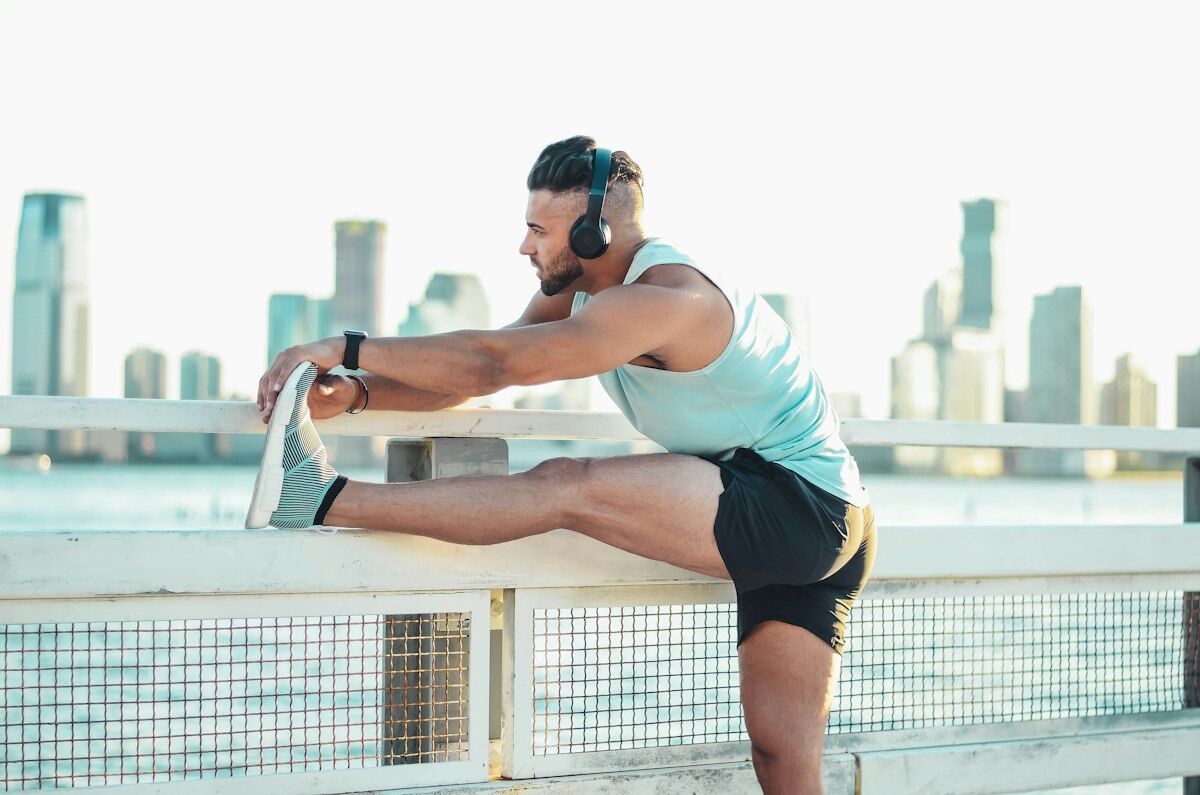
Fact #2: Static Stretching Before Lifting Does Not Prevent Soreness
Holding static stretches before exercise was once believed to prevent muscle soreness. Modern exercise science has disproven this advice. Static stretching before lifting can reduce explosive muscle power and does not reduce DOMS after your workout.
According to a systematic review in the Cochrane Database of Systematic Reviews, static stretching before or after exercise produces no meaningful reduction in muscle soreness. Spend pre-workout time doing dynamic warm-ups like bodyweight squats to prepare joints for heavy loads.
- Key Takeaway: Static pre-workout stretching does not reduce muscle soreness or prevent DOMS.
- Action Item: Replace static stretches with 5 to 10 minutes of dynamic movements before lifting.
- Bonus Tip: Save static stretching for after your workout when muscles are warm.
How Body Journey Helps: Use Body Journey to log warm-up routines and keep pre-workout preparation consistent.
Fact #3: Complete Bed Rest Delays Soreness Recovery
When severe soreness strikes, it is tempting to spend the day resting. Inactivity is one of the worst choices for recovering from muscle soreness. Sitting still reduces blood circulation, allowing metabolic waste to linger in tissues.
Research published in the Journal of Athletic Training shows active recovery is far more effective at reducing soreness than passive rest. Light movement like walking increases blood flow, delivering oxygen to repairing fibers. Coupling active recovery with avoiding cardio myths ensures energy is spent efficiently.
- Key Takeaway: Light movement speeds up muscle recovery much faster than lying in bed.
- Action Item: Take a 20-minute brisk walk or do light mobility work on rest days.
- Bonus Tip: Stay hydrated to support nutrient transportation and flush out waste.
How Body Journey Helps: Download Body Journey to track daily step counts and active recovery sessions alongside workouts.
Fact #4: Extreme Soreness Can Impair Muscle Growth
Becoming so sore that you cannot bend your knees is not a badge of honor. Excessive soreness indicates severe tissue damage that can hinder long-term muscle gains. When damage is severe, your body spends energy repairing tears rather than building muscle mass.
Extreme soreness also compromises training frequency. If leg soreness forces you to skip workouts, total weekly volume drops. You can learn more about structuring schedules in our guide on workout routine myths.
- Key Takeaway: Severe muscle damage limits training frequency and slows muscle growth.
- Action Item: Manage workout volume so you feel mild tightness rather than debilitating pain.
- Bonus Tip: Prioritize post-workout nutrition and get 7 to 9 hours of quality sleep.
How Body Journey Helps: Use Body Journey to monitor workout frequency and rest days, hitting every muscle group consistently.

The Bottom Line
Stop letting muscle soreness myths dictate training success. Soreness is simply a byproduct of novel movement, not a requirement for progress. Focus on progressive overload, smart dynamic warm-ups, active recovery, and consistent workout tracking.
Take Action Today
Ready to take control of your fitness journey without guesswork? Tracking workouts and recovery metrics is the best way to ensure progress. Download Body Journey today to log workouts, monitor strength trends, and transform your training.
Frequently Asked Questions
How long does delayed onset muscle soreness usually last?
Delayed onset muscle soreness typically begins 12 to 24 hours after a workout, peaks between 24 and 48 hours, and subsides over 3 to 5 days as muscles repair.
Is it safe to workout when your muscles are still sore?
Yes, provided soreness is mild to moderate and form is not compromised. If soreness is severe, perform light active recovery or train a different muscle group.
What is the fastest way to relieve muscle soreness?
The most effective ways to alleviate soreness are active recovery like walking, light massage, staying hydrated, consuming adequate protein, and getting sufficient sleep.
Does drinking extra water help reduce muscle soreness?
Yes, staying hydrated helps flush out metabolic waste products and delivers essential nutrients to damaged muscle tissue, supporting natural recovery.